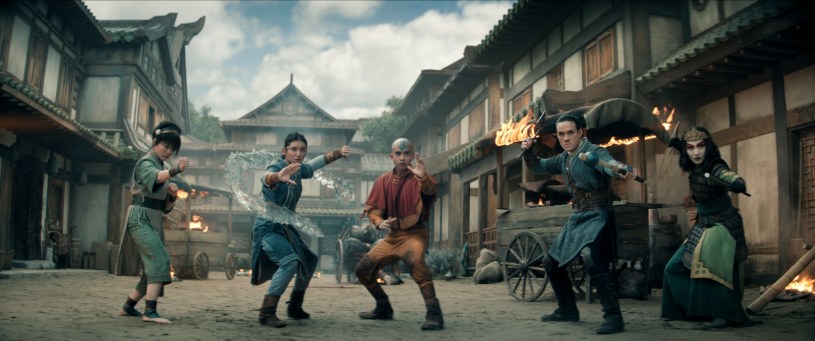
Like many, I was enthralled by the first season of Netflix’s live-action adaptation of Avatar: The Last Airbender. From Takeshi Furukawa’s breathtaking score to the stunning cinematography by Michael Goi, Stewart Whelan, Michael Balfry, and Simon Chapman, every frame felt crafted with genuine love for the original animated series that ran on Nickelodeon from 2005-2008.
The storytelling—brought to life by an exceptionally talented creative team—captured the heart, emotion, and epic scope that made Avatar a modern classic. And then there was the cast. Led by Gordon Cormier, Kiawentiio, Ian Ousley, Dallas Liu, and Paul Sun-Hyung Lee, every performance walked the delicate balance between honoring what came before while making them feel new and engaging.
The result was a perfect storm of nostalgia and heartfelt storytelling that reminded me exactly why I fell in love with this world in the first place.
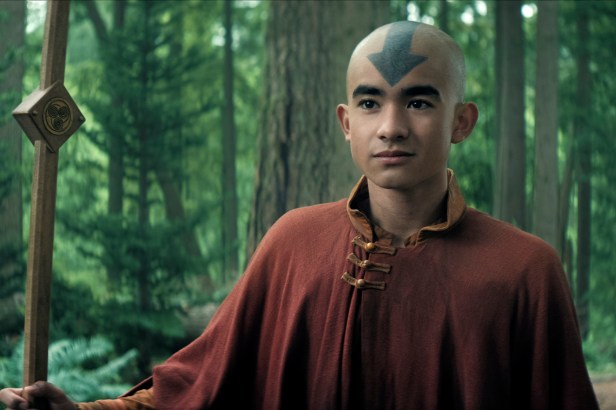
After saving the Northern Water Tribe from the Fire Nation invasion, Aang (Gordon Cormier), Katara (Kiawentiio), and Sokka (Ian Ousley) continue their journey across the Earth Kingdom as the looming threat of Fire Lord Ozai (Daniel Dae Kim) grows ever closer. With the Avatar still far from mastering the four elements, the trio must search for a new earthbending teacher while navigating political unrest, dangerous new enemies, and the growing realization that ending the Hundred Year War will demand far greater sacrifices than any of them imagined.
“I mean, this season is definitely going to be a lot more action-packed and emotional,” Cormier says. “I feel they took the script a little bit darker while keeping the fun elements of the show. There are going to be some scenes that are going to be pushing the audience to tears but also making them laugh.”
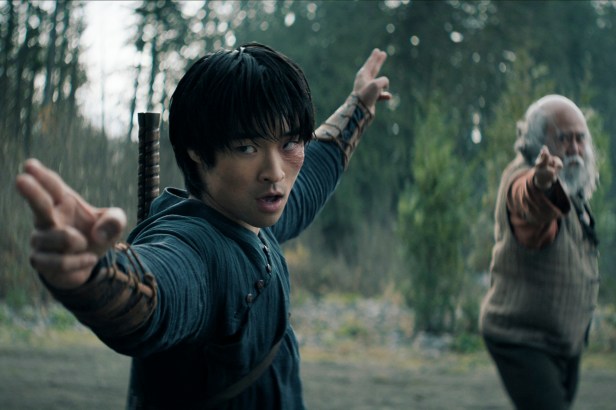
Meanwhile, Prince Zuko (Dallas Liu) and his ever-wise Uncle Iroh (Paul Sun-Hyung Lee) find themselves on a very different path. No longer driven solely by the pursuit of the Avatar, Zuko’s journey begins shifting inward as questions of honor, destiny, and identity slowly eclipse his father’s impossible expectations. It’s a season that expands the world in every direction, introducing memorable new allies and adversaries while exploring the emotional weight each character carries beneath the fantasy spectacle.
Miyako makes an exceptional debut as Toph Beifong, effortlessly capturing the earthbending prodigy’s trademark confidence, razor-sharp wit, and surprising vulnerability. Rather than imitate the animated performance beat-for-beat, Cech makes the role entirely her own while preserving everything fans have loved about Toph for nearly two decades. The season also expands the political landscape with memorable new players, from the calculating Princess Azula (Elizabeth Yu), whose quiet menace continues to simmer beneath the surface, to Earth Kingdom leaders, rebels, and allies who help make the world feel larger and more lived-in than ever before.
While the first season proved Netflix could successfully bring Avatar into live action, Season Two confidently demonstrates that the series has found its own identity. Every aspect of the production has been elevated, from the richly detailed sets and increasingly cinematic action sequences to visual effects that make bending feel more dynamic and tactile than ever before. Furukawa’s score once again serves as the emotional heartbeat of the series, seamlessly blending familiar themes with sweeping new compositions that heighten both the intimate character moments and the large-scale spectacle.
Now in his mid-teens, Cormier continues to grow alongside Aang, bringing greater confidence and emotional maturity to the young Avatar, while Dallas Liu delivers another remarkable performance as Zuko, whose internal conflict remains the emotional backbone of the series. The writing still occasionally rushes through the story in an effort to condense an expansive animated series into just a handful of episodes, leaving certain emotional moments less room to breathe than they deserve – however, those shortcomings are outweighed by heartfelt performances and a clear reverence for the source material. Some of the quieter emotional moments would have benefited from an additional episode or two, allowing key character beats to land with even greater impact.
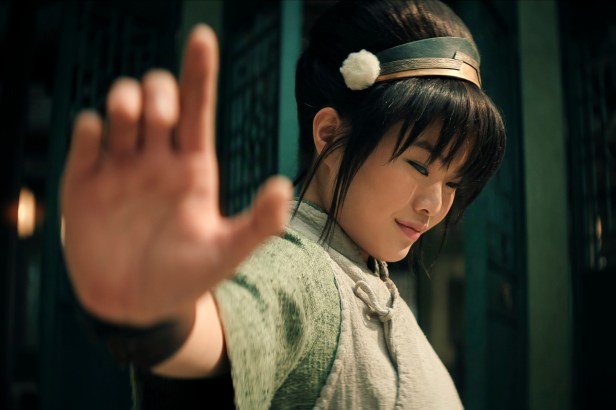
“I am so impressed with our writing team,” Miyako says. “There’s something so interesting about the way they’ve done it, keeping iconic moments, but maybe changing the timeline. But they’re there. Die-hard fans will definitely be able to recognize those. For me, personally, as a die-hard fan of the original, I was super, super excited to do the Boulder fight and Kelemete Misipeka, who played the Boulder, was also just super cool. It was amazing how they basically rented out this mine museum, and we were literally on one of the mines, on one of the exhibits, performing this crazy fight scene. That was incredibly surreal for me.”
Where Season One was largely about bringing the three unlikely heroes of Team Avatar together, season two lets them truly become a family. Their playful banter, unwavering loyalty, and genuine affection for one another feel completely natural, creating an emotional foundation that is the series’ greatest strength.
Season Two may not replace the animated masterpiece that inspired it—but it’s exactly what a live-action adaptation should aspire to be: a fresh interpretation that honors its roots while confidently standing on its own.
There will be more Avatar The Last Airbender soon so…
Stay Tuned!

