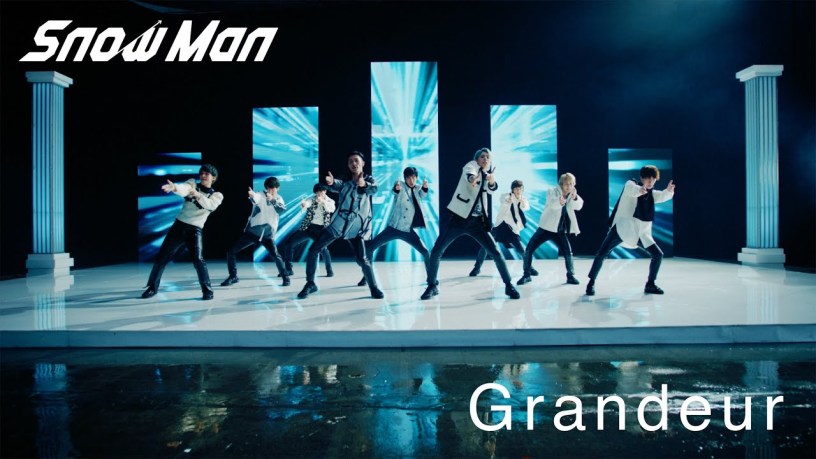
With two certified hits already under their belt, Snow Man returned with their third single, 『Grandeur』that once again proved the group’s unstoppable momentum across the Japanese music industry. Dominating sales, the single further cemented the nine-member act as one of the defining forces of a new generation of J-Pop idols.

As with the previous single, 「Grandeur」 was used as the 13th opening theme for the anime Black Clover (their precious single was the 11th theme to the same series).
Beneath the explosive choreography, larger-than-life production, and triumphant energy of the track was something equally important: a growing emotional depth within the group’s music.
While 『Grandeur』 delivered the kind of high-powered spectacle fans had come to expect, its coupling songs revealed a more vulnerable and heartfelt side to Snow Man’s artistry. The single demonstrated that beyond the dance albums Snow Man was developing the ability to connect with listeners on a deeply emotional level, blending warmth, longing, and sincerity into performances that resonated far beyond the music itself.
The irresistibly bright 「Big Bang Sweet」 perfectly captures Snow Man’s ability to balance polished idol pop with pure synth-stitched serotonin. Built around candy-coated chords, buoyant melodies, and the warm sweetness of the members’ vocals, the track radiates like a kaleidoscopic of pastel energy. For me, it remains one of Snow Man’s strongest B-sides precisely because of how unapologetically fun it is.
Sweeping, inspirational, and deeply heartfelt, 「ナミダの海を越えて行け」 (English: “Beyond the Sea of Tears”) became the theme for the group’s variety program Sore Snow Man ni Yarasete Kudasai, and quickly became intertwined with Snow Man’s public identity and journey toward success. As a result, many listeners interpret the song not as abstract anime-style inspiration, but as something deeply autobiographical, reflecting the struggles, determination, and emotional resilience that shaped the group long before their rise to superstardom.
As the group’s first post-debut ballad, 「EVERYTHING IS EVERYTHING」 remains one of Snow Man’s most vocally intimate and emotionally resonant songs. Built around gentle piano melodies, swelling strings, and restrained performances, the track reveals a softer vulnerability rarely showcased so openly during the act’s early years. Rather than relying on grand dramatics, the composition draws its strength from sincerity, with each voice carrying a quiet warmth that feels deeply human and comforting. More than just another coupling track, 「EVERYTHING IS EVERYTHING」 helped solidify the emotional core of Snow Man’s artistry, further defining not only who they were becoming as performers, but why audiences connected with them so deeply in the first place.
The original physical release of『Grandeur』came in three different formats:
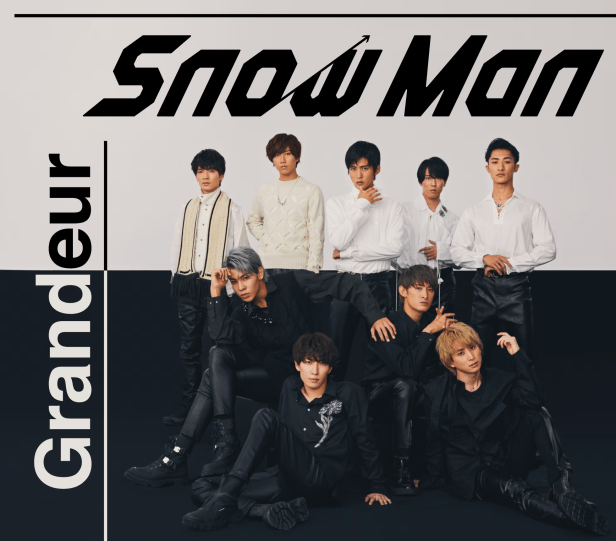
Edition A (with DVD)
💿「Grandeur」
💿 「Big Bang Sweet」
📼 「Grandeur」 (Music Video)
📼 「Big Bang Sweet」 (Music Video)
📼 「Big Bang Sweet」 (Dance Video)
📼 「Jacket / Music Video Making of movie」
The First-Press edition also came with a Grandeur poster (A4)

Edition B (with DVD)
💿「Grandeur」
💿 「ナミダの海を越えて行け」
📼 「Grandeur」 (Multi-Angle Video)
📼 「ナミダの海を越えて行け」 (Music Video)
📼 Exclusive Bonus Footage
The first-press edition also came with a ナミダの海を越えて行け poster (A4)
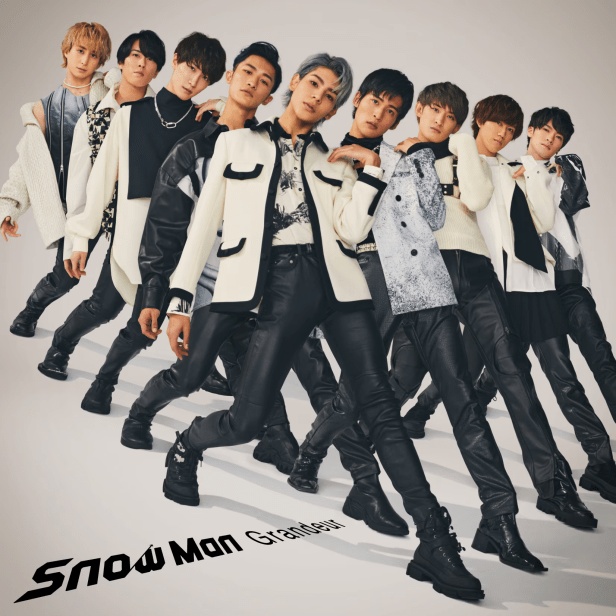
Regular (CD Only) Edition
💿「Grandeur」
💿 「Big Bang Sweet」
💿 「ナミダの海を越えて行け」 (English: Across the Sea of Tears)
💿 「EVERYTHING IS EVERYTHING」
💿 「Grandeur」 (Original Karaoke)
💿 「Big Bang Sweet」 (Original Karaoke)
💿 「ナミダの海を越えて行け」 (Original Karaoke)
💿 「EVERYTHING IS EVERYTHING」 (Original Karaoke)
💿 「Snow Man “D to G” Voice Drama」
The first-press edition included a slip-cover, photo book, and links to disc-exclusive online content.
Debuting at number one on the Oricon Weekly Singles Chart, 『Grandeur』 continued Snow Man’s astonishing streak of dominance across the Japanese music industry, selling more than 800,000 physical copies within its opening week. The title track also topped multiple domestic music rankings, reinforcing Snow Man’s position as one of the most commercially viable acts of their generation.
Yet what made 『Grandeur』 especially important was not the sales or chart performance, but what it represented artistically. The release showcased a rapidly evolving act capable of delivering explosive dance anthems, uplifting motivational songs, bright pop experimentation, and deeply emotional ballads all within the same package. Instead of settling into something formulaic (that was clearly working) Snow Man expanded their musical identity even further, laying the groundwork for the emotional depth and stylistic versatility that would continue defining the group in the years ahead.

There will be more Snow Man soon so…
Stay Tuned!

