
For anyone who lived through the male-driven, female-voiced pop machine of the early 2000s, Willa Ford was impossible to ignore.
She wasn’t just another pretty face or a powerhouse vocal, though she could easily be both. She was a songwriter who put her pen exactly where her mind was and never seemed particularly interested in playing along with the misogynistic dick-measuring contest that defined the pop landscape of the time.
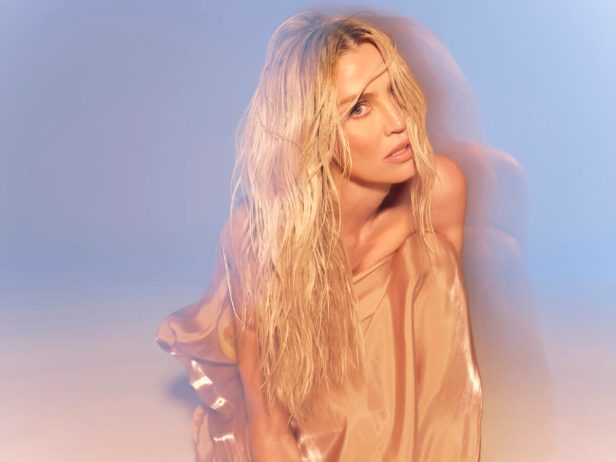
She wasn’t a pop star. She was an artist.
I discovered her the same way I discovered a lot of artists back in high school: awake far later than I should have been on a school night, MTV flickering in the background after one of my school’s closeted jocks had climbed through my bedroom window for a brief exploration of a truth they were not ready to have exposed by the light of day.
At the time, my airwaves were ruled by artists like Mandy Moore and Jessica Simpson, with a little of the lingering spark left over from Debbie Gibson. Basically, good girls who fit the cookie-cutter mold, singing songs about the energy of youth, the candy-coated sweetness of first love, and Jesus.
To be perfectly clear, there was nothing wrong with those artists or that sound. In fact, all of them still live comfortably in the rotation on my devices to this day. But there was something different about Willa Ford. Something exciting.
She felt like a breath of fresh air…
「I Wanna Be Bad」 wasn’t just my jam of 2001. It was an awakening, stoking the flames of a teenage rebellion that would eventually lead me toward living as my authentic self.
The follow-up single 「Did Ya Understand That」 became the middle finger I needed for the jocks who pretended to hate me in the hallways but loved the way I made them feel in the backseat on the dirt roads just beyond the lights of the one-horse town I grew up in.
Songs like 「Santa Baby (Gimme, Gimme, Gimme)」 and 「A Toast to Men」 were fun, and for a brief moment fans could even hear snippets of tracks like 「FU」 and 「SexySexObsessive」 from a rumored second album on her official website. Then Willa just kind of… vanished.
She did pop up here and there, including starring as Anna Nicole Smith in the 2007 biopic The Anna Nicole Smith Story. But musically, she was almost silent.
Until now.
Released on 6 March 2026, amanda traces the life Ford has lived since stepping out of the spotlight, touching on the personal struggles, health scares, and trauma that forced her to reevaluate her relationship with music. The album represents a symbolic shedding of the pop persona and a rebirth of the woman she has always been. Amanda is her given name; Willa Ford, after all, is simply a play on her last name, Williford.
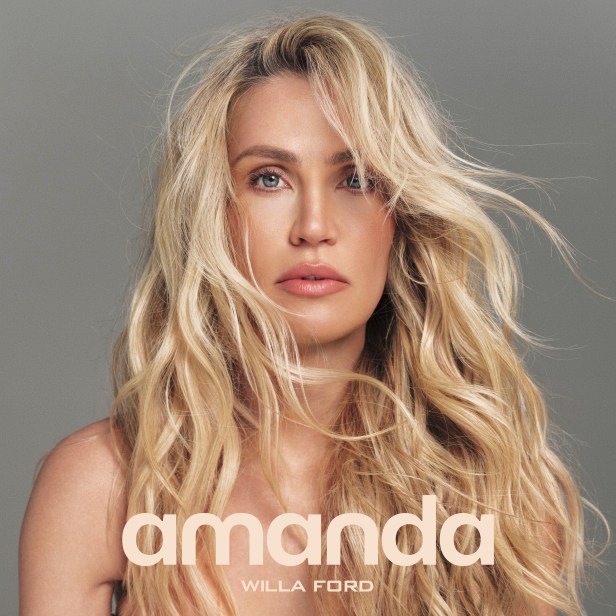
And it’s damn good.
But some of those experiences became so deeply buried in the catacombs of her mind that when she began preparing her return, they manifested as psychogenic nonepileptic seizures.
In true Willa Ford fashion, she confronted the disorder head-on with one of the album’s strongest tracks, 「Disassociate」.
A close second for best track on the album is its closing song, 「Tombstone」. Stripping everything down to something quiet and reflective, it’s a beautiful piece of music about haunting memories and the fact that even though she’s forgiven, she hasn’t forgotten.
「Safe With Me」 showcases the sheer emotional power of a voice unchanged from the last twenty years while 「Love4Life」 and 「Money Honey」 lean into the glossy, sugar-sweet dance sound, and are the most reminiscent of her previous releases. 「Carousel」 is another lush, symphonic pop track reminiscent of the classic Beach Boys-era arrangements.
In a recent interview with Denny Directo for Entertainment Tonight, Ford spoke candidly about how damaging the term “one-hit wonder” can be for an artist, noting how quickly people “forget what it takes to have a hit.”
And as someone who’s been there myself, I know how quickly an artist can become a caricature of themselves if they aren’t careful. Willa Ford isn’t ashamed of who she was or what she’s been through. She’s not trying to reinvent what came before. Instead, she’s using it as the foundation to show us exactly who she is now.
Amanda.
And in case you were curious… hers has always been bigger.
The album is available on digital platforms worldwide, including Qobuz which offers a hi-res 24-Bit/48 kHz stereo download in formats like Apple Lossless, FLAC, and AIFF.
There will be more music reviews soon…
Stay Tuned!
 Life In Cartoon Motion