My grandfather would have loved this modern era of nature documentaries. When I was a child, I spent countless hours watching series like National Geographic Explorer, Nova, and In Search Of… with him. Those afternoons helped turn me into the history nerd I am today. Even now, I still find these kinds of programs endlessly fascinating, especially those that turn their attention toward our prehistoric planet.
Dinosaurs, in particular, have always captured my imagination. So when Netflix released Life on Our Planet in 2023, I devoured the entire eight-episode series in a single sitting.
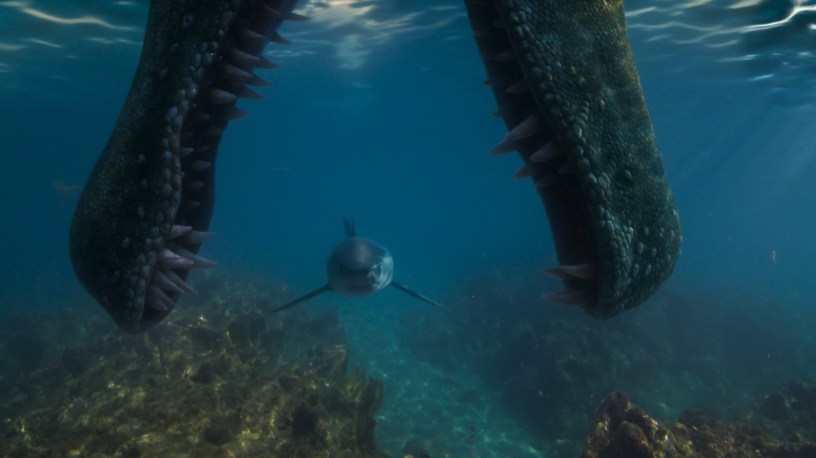
Produced by Amblin Television and Silverback Films, the series was executive-produced by Steven Spielberg and narrated by Morgan Freeman. Each episode explores several key geological periods, tracing the dramatic environmental and ecological shifts that shaped life on Earth. These ancient worlds are brought to life through a blend of live-action footage used as natural stand-ins and carefully rendered visual sequences that reconstruct long-vanished landscapes. The prehistoric creatures that inhabited these eras appear through photorealistic CGI, echoing the immersive style popularized by landmark series like Walking with… and Prehistoric Planet.
Alongside these journeys into deep time, the series also highlights modern species whose evolutionary roots stretch back to the periods being explored. Through nature-documentary segments filmed in the present day, viewers see how these living descendants carry ancient legacies in their biology and behavior, revealing the remarkable adaptations that have allowed their lineages to endure across millions of years.
I was spellbound. Digital animation has advanced tremendously over the past two decades, and when paired with Freeman’s unmistakable narration, the result is pure television magic.
Now the creative team has returned with a semi-sequel series, The Dinosaurs, and it proves just as captivating as its predecessor. Centered on the rise and fall of the dinosaurs, the series spans roughly 170 million years of history across four fifty-minute episodes.
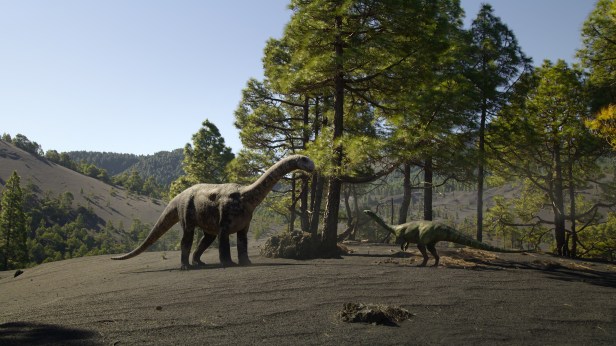
Much like Life on Our Planet, the series explores what life may have looked like for various dinosaurs and their ancient reptilian ancestors. These prehistoric giants ruled the Earth long before humans ever appeared, and the show does an excellent job bringing their world vividly to life.
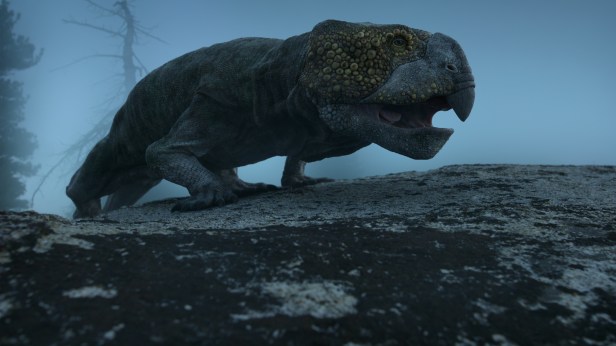
In the Permian and Triassic periods, creatures like sail-backed Dimetrodon, the heavily armored Scutosaurus, and the crocodile-like Postosuchus dominated ecosystems that were still recovering from one of the greatest extinction events in Earth’s history. These were the creatures that hunted the dinosaurs. They’re fascinating.
As with the earlier series, I ended up binge-watching it in a single sitting. But with only half the episode count of its predecessor, I was left wanting more. Honestly, I could have easily watched eight or even ten episodes, expanding the spotlight beyond superstars like Tyrannosaurus rex to include fascinating species such as Brontosaurus or Styracosaurus.
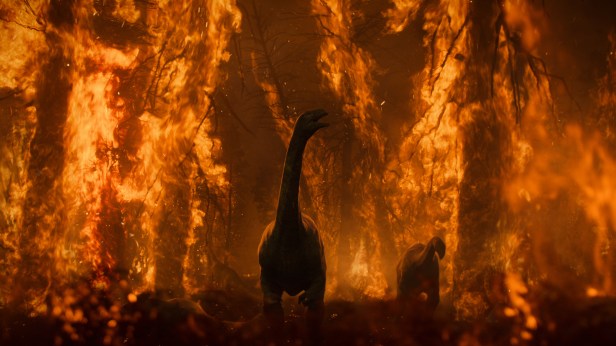
Still, even with its shorter run, the series is incredibly well done and a joy to watch. Hopefully there will be more installments in the future. In the meantime, viewers looking for another prehistoric fix can always turn to the Apple TV+ series Prehistoric Planet, narrated by Sir David Attenborough and Tom Hiddleston.
More reviews are on the way, so…
Stay tuned!
 Life In Cartoon Motion