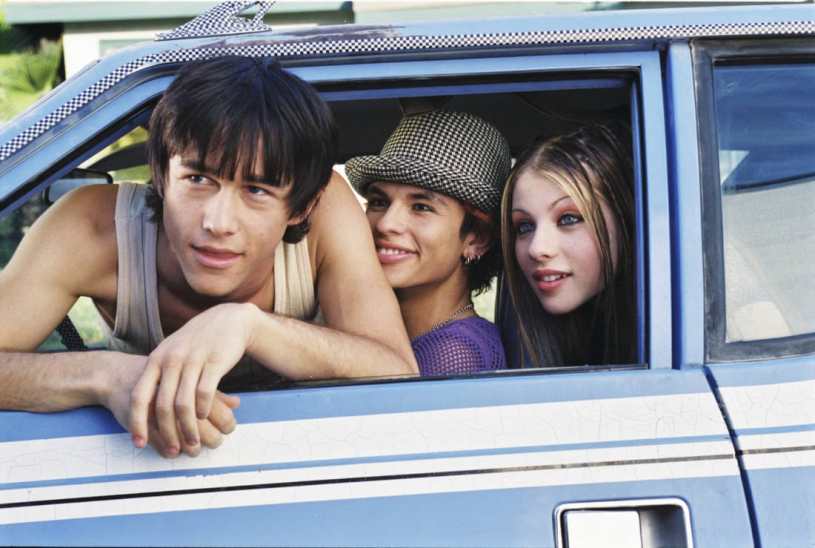
Last fall, Strand Releasing reintroduced audiences to Gregg Araki’s 2004 masterpiece Mysterious Skin, inviting a new generation to encounter one of the most haunting and compassionate films ever made about childhood trauma, repressed memory, and sexual abuse. A longtime personal favorite, it remains as devastating as it is tender, a film that lingers like a bruise you only notice when you press on it.
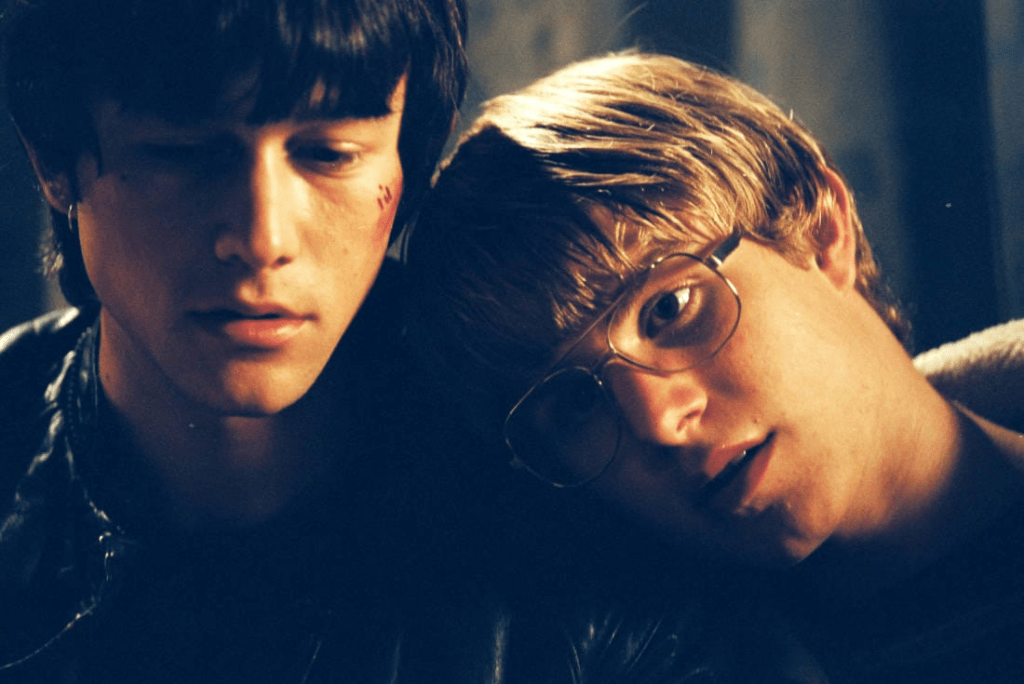
Adapted from Scott Heim’s acclaimed 1995 coming-of-age novel of the same name, the story begins in the quiet plains of Hutchinson, Kansas, during the summer of 1981, when an unspeakable event shatters the lives of Little League teammates Neil McCormick and Brian Lackey. As they grow into adolescence, the psychological fallout manifests in starkly different ways. Neil (Joseph Gordon-Levitt) drifts into sex work with older men, chasing intimacy in its most fragile and transactional form, while Brian (Brady Corbet), plagued by recurring nightmares of an alleged alien abduction, becomes consumed with uncovering the truth about his past. His search ultimately leads him back to Neil, the one person he believes shared that strange and terrible night. As the pieces begin to align, the reality that emerges is far more devastating than any extraterrestrial explanation.

Mysterious Skin premiered at the 61st Venice International Film Festival in September 2004. Though it was not a commercial success, its modest financial performance stood in stark contrast to its critical reception – which was as one of the most talked-about independent dramas of the year.
Critics praised its lyrical restraint, emotional honesty, and refusal to sensationalize its subject matter, while many mental-health professionals noted the film’s unusually accurate depiction of dissociation, fragmented memory, and the long shadow cast by childhood sexual abuse. A modern cult classic, the film has been frequently cited among the most important queer films of the 2000s.
Araki not only directed the film but also adapted Scott Heim’s novel for the screen, crafting a story that is almost hypnotic from the moment we fade in on the story. The narrative flows like memory itself, drifting between past and present, certainty and doubt, grounding its emotional realism with a faint shimmer of science fiction that is as compelling as it is unsettling. It’s that delicate balance that keeps the story from collapsing under the weight of its subject matter, allowing the science-fiction side-story to function as both narrative engine and psychological shield.
For me, as a young gay man growing up on the windswept prairie of northeastern Montana, the film I recognized the emotional geography of Neil immediately and while I have never walked his particular path, his longing to outrun the gravity of small-town life felt instantly recognizable. His hunger for connection, for reinvention, for somewhere that promised more than endless horizons and limited futures, mirrors a feeling many queer kids know by heart.
It’s beautiful.
The film also features the late Michelle Trachtenberg as Neil’s strongest ally (and truest friend) Wendy Peterson, with Elizabeth Shue delivering a quietly heartbreaking performance as his mother, Ellen. Mary Lynn Rajskub appears as fellow abductee Avalyn Friesen, while Bill Sage portrays the man responsible for the boys’ trauma.

At the time of its release, both Gordon-Levitt and Trachtenberg were riding significant career momentum from successful television and film roles. In a 2005 interview with Film Force, Gordon-Levitt reflected on the transformative nature of the part: “It is a really different role for me, and I’ll always be really grateful to Gregg for believing that I could do a role like this. I’ve played the nice kid, and the smart one or funny one and even the angry one, but Gregg was the first one to call me sexy, and I’ll always be really grateful for that.”
Later this year, Strand will also release new 4k, with a run time of 107 minutes the film is (for obvious reasons) rated NC-17.
There will be a full review of this film soon so…
Stay Tuned!
 Life In Cartoon Motion