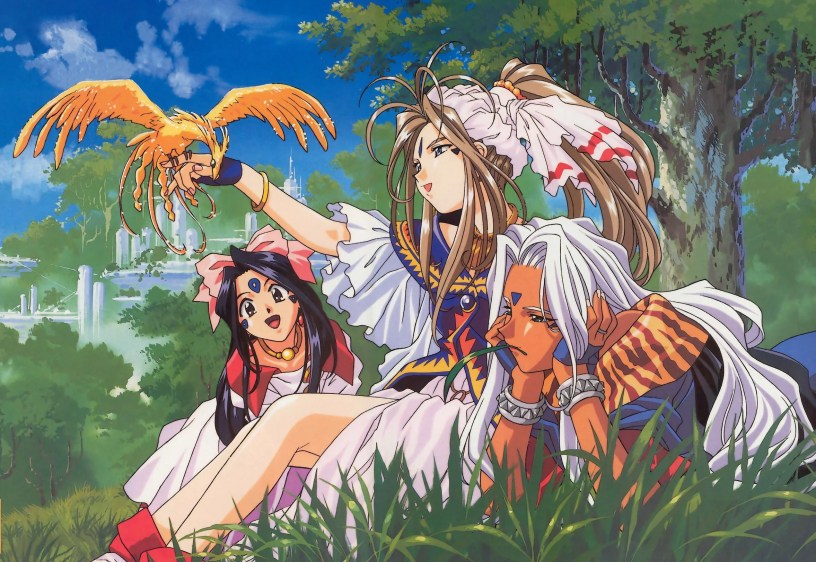
Ah! My Goddess (ああっ女神さまっ) was my introduction to anime. As such, I’ve always held it near and dear to my heart. After scoring some truly outrageous musical finds at Mandarake and Book Off, I decided to give the original Original Video Animation (OVA) series a re-watch. I wanted to see if it still held up.
The first adaptation of the Ah! My Goddess! manga—written and illustrated by Kōsuke Fujishima—the OVA (produced by Anime International Company, KSS, Tokyo Broadcasting System and Kodansha) was distributed by Pony Canyon and licensed for release in North America by AnimEigo. It was the first exposure of the series to audiences outside of Japan, many of whom would go on to become lifelong fans (myself included).
Directed by Hiroaki Gōda, with a screenplay written by Kunihiko Kondo and Nahoko Hasegawa, the music was composed by Takeshi Yasuda with character designs by Hidenori Matsubara.

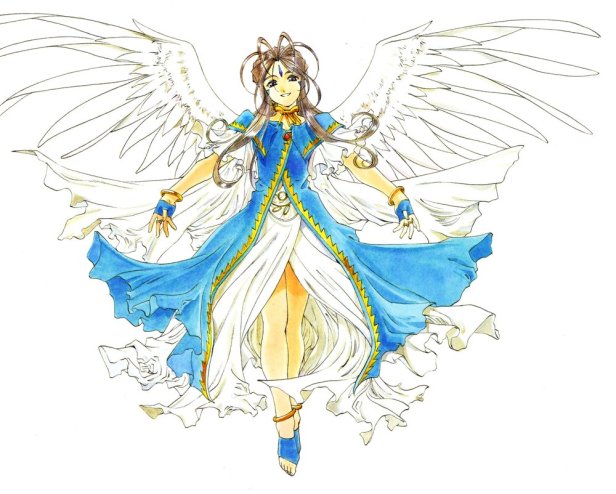
As a spunky ten-year-old, it felt like one of the most magical things I had ever seen. I instantly fell in love with the look, personality, and gentle energy of Belldandy, as well as her relationship with the adorably clueless Keiichi Morisato. The music only deepened that connection—especially the OVA’s theme, 「My Heart いいだせない、Your Heart確かめたい」 (simplified English: My Heart / Your Heart). It’s an undeniable bop, still in constant rotation on my iPhone—particularly when I need a quick shot of sonic serotonin.
Released as a five-episode story arc airing between volumes 7 and 10 of the manga, the adaptation follows a largely original narrative.
Episode 1: Moonlight and Cherry Blossoms (21 February 1993)
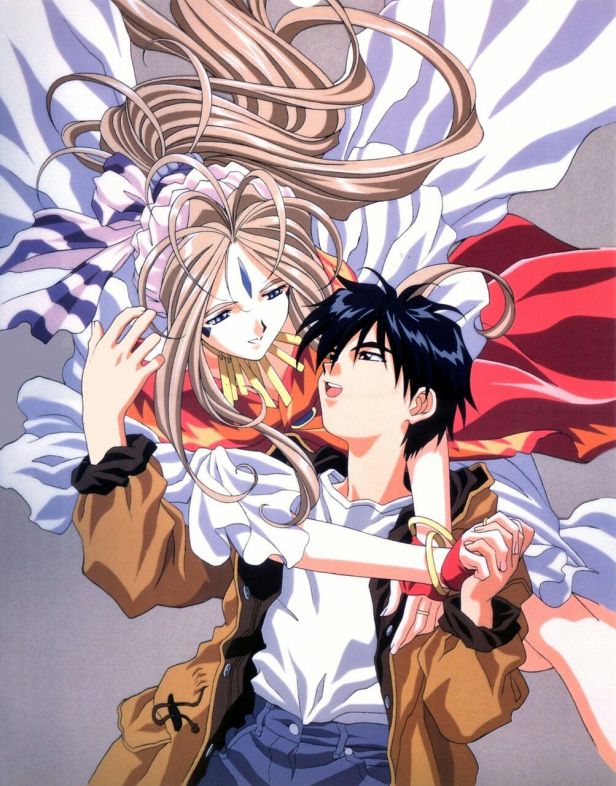
Keiichi Morisato’s life changes forever when a wrong number connects him to the Goddess Helpline—and summons the impossibly beautiful and gentle-to-a-fault Belldandy into his dorm room – who offers him a single wish. Believing it’s a joke set up by his seniors, he wishes that she stay with him “forever” as his girlfriend. To his surprise, the wish is granted and the Ultimate Force binds them together – forever. But there’s only one problem – women are not allowed in his dorm.
Kicked out, the pair find refuge in a forgotten temple, which Belldandy quietly restores with her divine magic. By morning, their peaceful new life is already attracting chaos—especially when Keiichi’s energetic little sister Megumi and the Auto Club arrive, turning the temple into the unlikely hub of a blossoming found family.
Episode 2: Midsummer Night’s Dream (21 May 1993)
Five months into their cohabitation, Keiichi and Belldandy’s relationship remains adorably shy—until Belldandy’s mischievous older sister Urd finds her way into the hands of Keiichi (in the form of an adult video tape). Literally stepping out of a TV screen to intervene, er well-intentioned matchmaking quickly spirals into magical chaos.
Spiced-up suntan lotion, Love potions, and a near-drowning at the beach are just the beginnings of the destruction caused by Hurricane Urd. However, a single, heartfelt kiss from Belldandy brings Keiichi back to himself, and everything is set right. However, as punishment for her tampering, Haven grounds to Earth—which means the Morisato household gains another goddess.
Episode 3: Burning Hearts on the Road (21 September 1993)
With her elder sisters on Earth, the youngest Goddess, Skuld is left to celestial bug-hunting duty, which she despises with the passion of a thousand burning suns. Finally at her wits end, she descends to Earth—determined to bring Belldandy back home with her (She could care less what happens to Urd).
Meanwhile, Keiichi pours his heart into building a custom motorbike for a drag race, with Skuld reluctantly helping. When a rival club declares Belldandy the prize for victory, Skuld sabotages Keiichi’s chances… only for destiny (and a busted rival engine) to hand him the win.
Slowly, Skuld begins to accept her sister’s love of life on Eart.

Episode 4: Evergreen Holy Night (28 December 1993)
A mysterious snowfall inside the temple signals something deeply wrong. Skuld discovers that the celestial bugs have followed her to Earth, escaping through a portal that’s opened between Keiichi and Belldandy. Whats more, whenever the two are close – chaos ensues.
Their forced distance sparks rumors, heartbreak, and literal magical disasters. Then, Heaven orders Belldandy to be recalled.
Keiichi, desperate to prove his feelings, takes on multiple jobs to buy the Goddess a ring, while the sisters trace the bug outbreak to the sacred cherry tree near the temple. The closer they get to the truth, the more fragile Belldandy’s place on Earth becomes.
Episode 5: For the Love of Goddess (17 May 1994)
As Belldandy prepares to return to heaven, Urd and Skuld resort to forbidden magic in a last-ditch attempt to ensure her happiness. Keiichi arrives with the ring just as she begins to fade from her earthly existence, triggering a catastrophic spell that merges their consciousness.
A forgotten past is revealed: Keiichi and Belldandy had met as children and made a forbidden promise, one so powerful it forced her to erase his memories. With those memories restored, the system collapses—forcing heaven to rescind its order. Keiichi finally gives Belldandy the ring, sealing their bond not just by a contract, but by choice.
But it’s not all happy endings. For their use of forbidden magic, Urd’s magic is suspended for 30 days and Skuld is forced to stay on earth as a trainee.
Until the debut of the 2005 television series, the OVA was widely regarded as the only anime continuity. That understanding shifted with the release of the official anime comics tied to the feature film, which clarified that the movie functions not as an adaptation or standalone retelling, but as a direct sequel to the OVA.
During its original license in North America, the series saw multiple releases on VHS and LaserDisc in 1994 and again in 1996, before making the jump to DVD twice—initially as a two-part release in 2001, followed by a single collector’s set in 2006. The North American license ultimately lapsed in 2010, which has prevented any chance of an English Blu-ray release.
While the television series boasts more advanced and polished animation, the OVA’s rewatchability remains remarkably high. There’s a warmth and sincerity to these original episodes that still resonates decades later—making them not just enjoyable to revisit, but genuinely comforting to return to.
There will be more anime reviews and rewatches soon so…
Stay Tuned!
 Life In Cartoon Motion