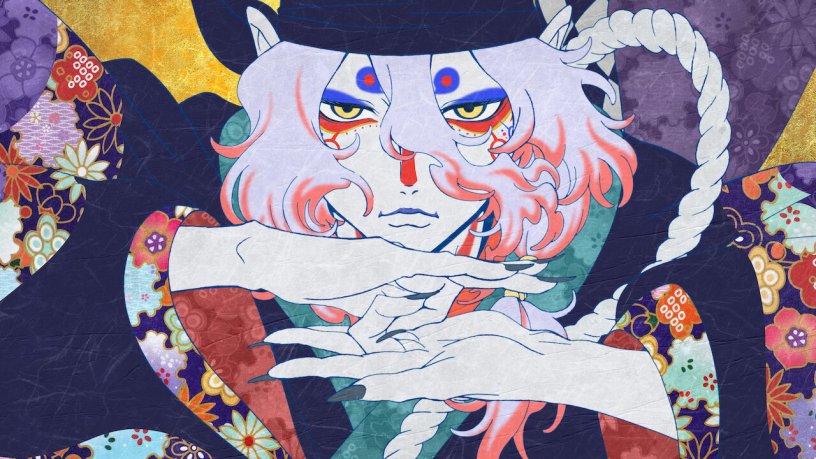
I’m thrilled to see how anime has gained such popularity in the States. With platforms like Netflix, Amazon, Rakuten Viki, and Crunchyroll, the availability of series and films seems endless, making it easier than ever to dive into different genres. Recently, I came across Mononoke the Movie: Phantom in the Rain on Netflix and, mistakenly assuming it was connected to Princess Mononoke, I decided to give it a go.
It very clear very quickly that the two are unrelated in any way. A continuation of the Mononoke anime, a spin-off from Ayakashi: Samurai Horror Tales, the only connection it has to the beloved Ghibli classic is the fact that its art and storytelling are impeccable.
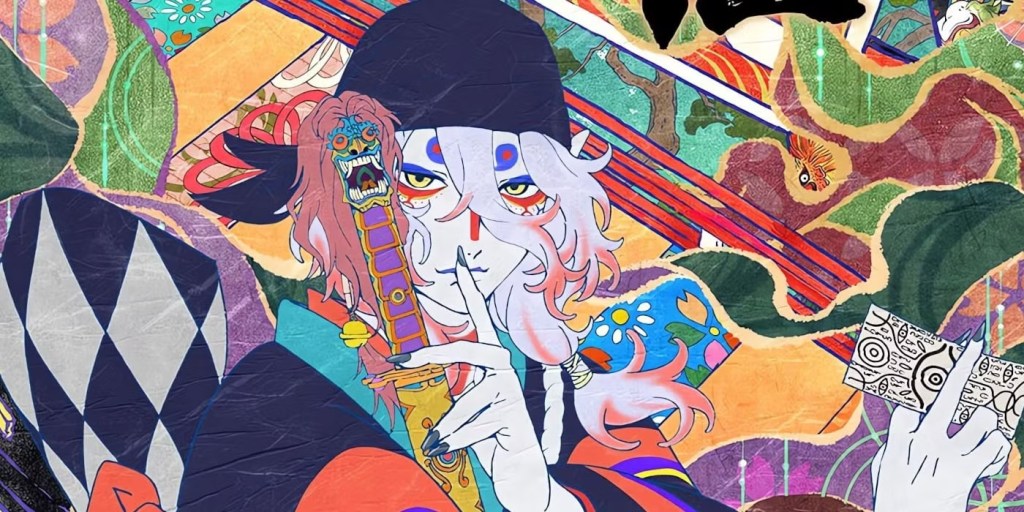
The film is a beautifully crafted piece of Japanese entertainment, blending traditional Japanese art styles with a modern, surrealist approach to animation – heightening the eerie and atmospheric tones of the story. The color, texture, and abstract representations, inspired by the original series, further amplify the strange, unsettling narrative as it unfolds into a chaos of color.
Asa and Kame, who find themselves working within the oppressive environment of the Ōoku, the women’s quarters of the Edo Castle. Asa is eager to advance her career, with dreams of becoming a scribe while Kame dreams of participating in the secretive and carnal rituals of the Inner Chambers (hopefully) as a concubine. As part of their transition to palace life, both women are forced to sacrifice their most cherished belongings into the mysterious well of the Ōoku.
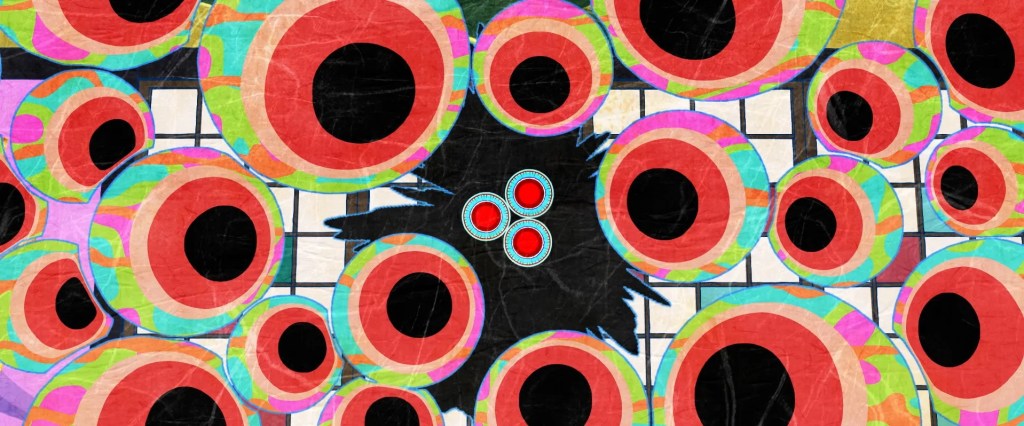
Watching them, is a mysterious Medicine Seller, a methodical and experienced figure who arrives to investigate the strange occurrences within the castle. A malevolent spirit – born from negative human emotions – has manifested itself in response to the oppressive and misogynistic traditions of the Ōoku.
The Medicine Seller, employing his traditional methods of investigation, must uncover the form, truth, and reason of the spirit before he can confront it with his sacred sword, and sending it back to the other side.
While I was unfamiliar with the predecessors, I stumbled upon the film while scrolling through Netflix, looking for something to play in the background as I wrote. Instead, I found myself completely engrossed, unable to tear my eyes away from the compelling story, captivating artwork, and the hauntingly beautiful score composed by Taku Iwasaki. The film’s aesthetic and musical elements combined to create an immersive experience that left me with a deep appreciation for its unique style and narrative depth.
A sequel film is already in the works.
 Life In Cartoon Motion